

The role of the financial and audit committee in corporate governance today is much broader than the classic control of financial reporting.
At Octava Capital, we consider the financial and audit committee as a key element of the management decision-making system and protection of business value.
Its function is not only to check, but to form an environment of trust: between shareholders, management and external partners.
A strong committee = a strong company.
What this means in practice:
- Transparency of finances – the committee ensures the reliability of management and financial reporting, which is the basis for strategic decisions and capital raising.
- Risk control – from operational to investment – a systematic approach to identifying and managing risks allows you to not just react, but to act proactively.
- Compliance and trust – in working with international partners, compliance with standards and procedures becomes a factor of competitiveness, not just a formality.
- Business efficiency – the committee acts as an independent “second look” at the financial model, investments and expenses, helping to increase the profitability of assets.
It is important to understand: corporate governance through committees is not bureaucracy, but a tool for scaling the business, which is why this model is basic at Octava Capital and covers key areas of asset management.
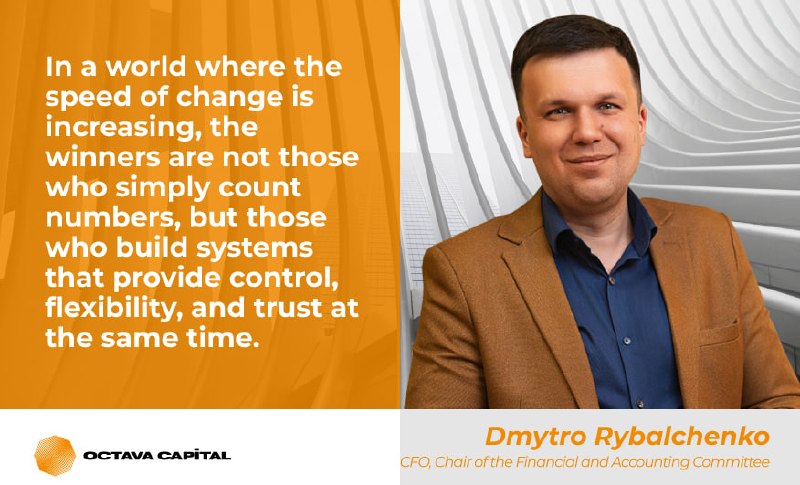
In a world where the speed of change is increasing, those who simply count numbers will not win, but those who build systems that provide control, flexibility and trust at the same time.