

In modern business, trust has become one of the most valuable assets, but trust does not arise by itself – it is based on transparency, high-quality corporate governance and independent control.
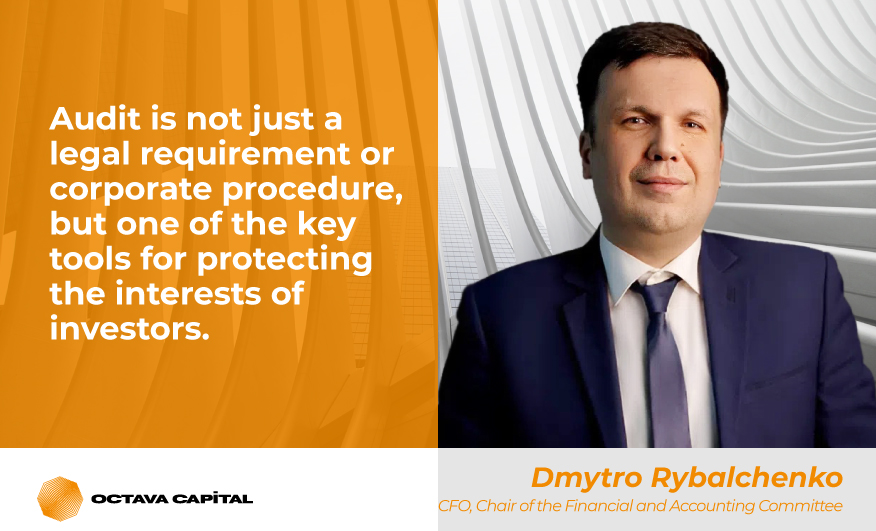
That is why an audit is not just a legal requirement or corporate procedure, but one of the key tools for protecting the interests of investors.
When an investor decides to invest capital, he evaluates not only the potential profitability. No less important are the reliability of financial information, the effectiveness of the internal control system, the quality of risk management and the company’s ability to fulfill its obligations.
This is where an audit creates real value, because:
✔️ Increases confidence in financial reporting – an independent audit confirms that financial information reflects the real state of affairs, and management decisions are based on objective data.
✔️ Helps to identify risks in a timely manner – an audit allows you to identify weaknesses in financial processes, internal control and corporate governance before they can lead to financial losses.
✔️ Protects the interests of shareholders and investors – the presence of an independent audit reduces the risk of financial manipulation, conflict of interest and inefficient use of company assets.
✔️ Promotes investment attraction – for international investors, transparency of financial reporting and a high-quality audit system have long become the basic criteria for evaluating a potential partner. The higher the level of corporate governance, the lower the risk premium and the easier it is for a company to attract financing.
Auditing becomes especially important during periods of economic instability. It is then that investors pay maximum attention not only to financial results, but also to how effectively the company manages risks and ensures transparency of its activities.
At Octava Capital, we consider audit to be an integral part of corporate governance. Its task is not only to confirm the correctness of the figures in the reports, but also to help management improve the control system, increase operational efficiency and strengthen investor confidence.
In the long term, trust is the factor that shapes the investment attractiveness of a company. And a high-quality audit is one of the most effective mechanisms for building it.